

Mountain Stories · Interview
Skalzang Rigzin on climbing Everest without bottled oxygen
He started out washing dishes on treks in Ladakh. Decades later he stood on Annapurna, Lhotse and Everest without bottled oxygen. In his own words: the climbs, the hardest night of his life, and how to acclimatise properly in Leh.
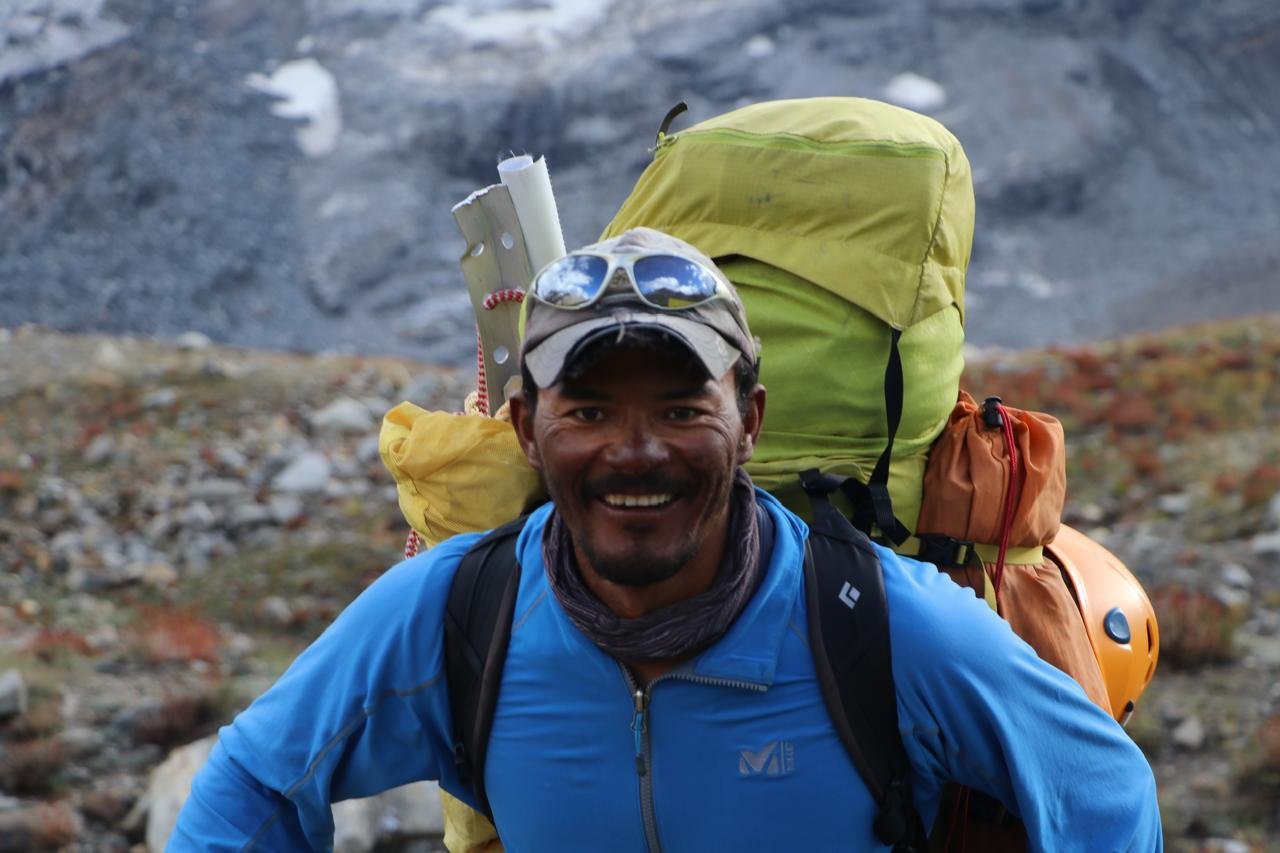
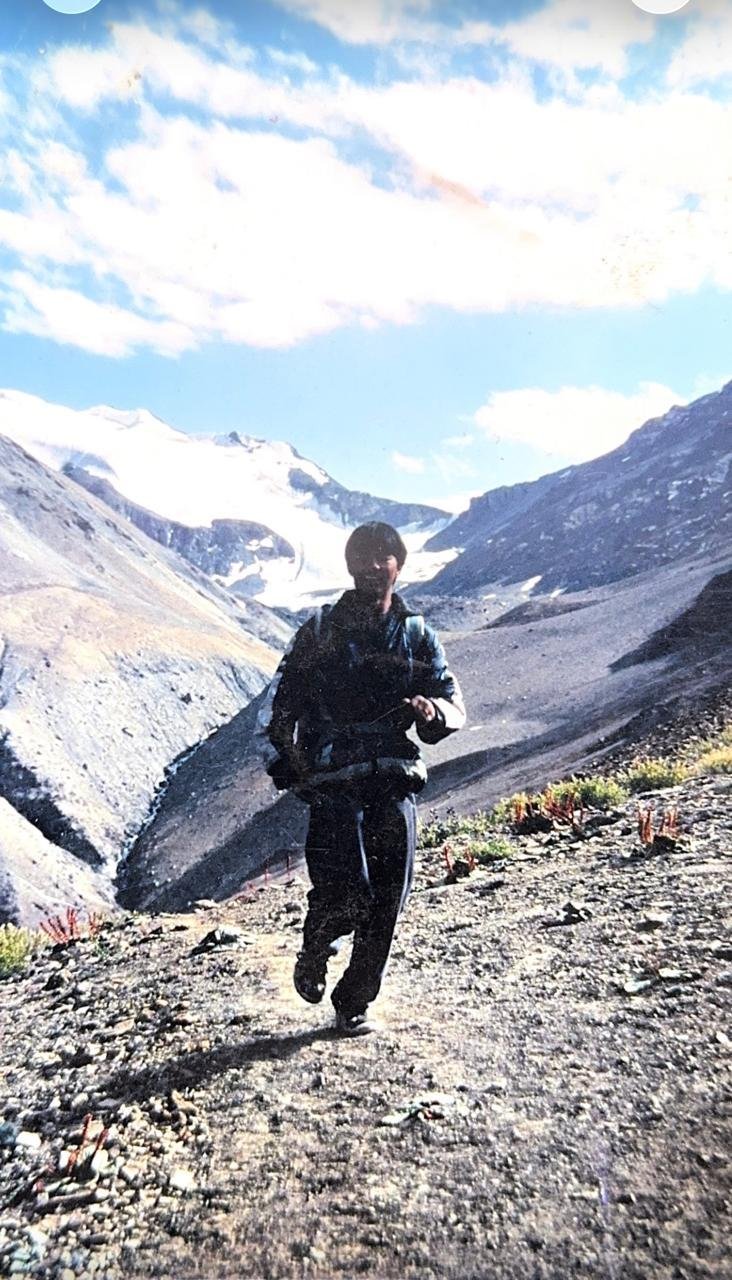
Skalzang Rigzin’s family comes from Tia village in Ladakh, and he grew up in Leh’s Housing Colony. His first trek was in 1996, as a camp helper. Today he is the president of the Ladakh Mountaineering Guides Association.
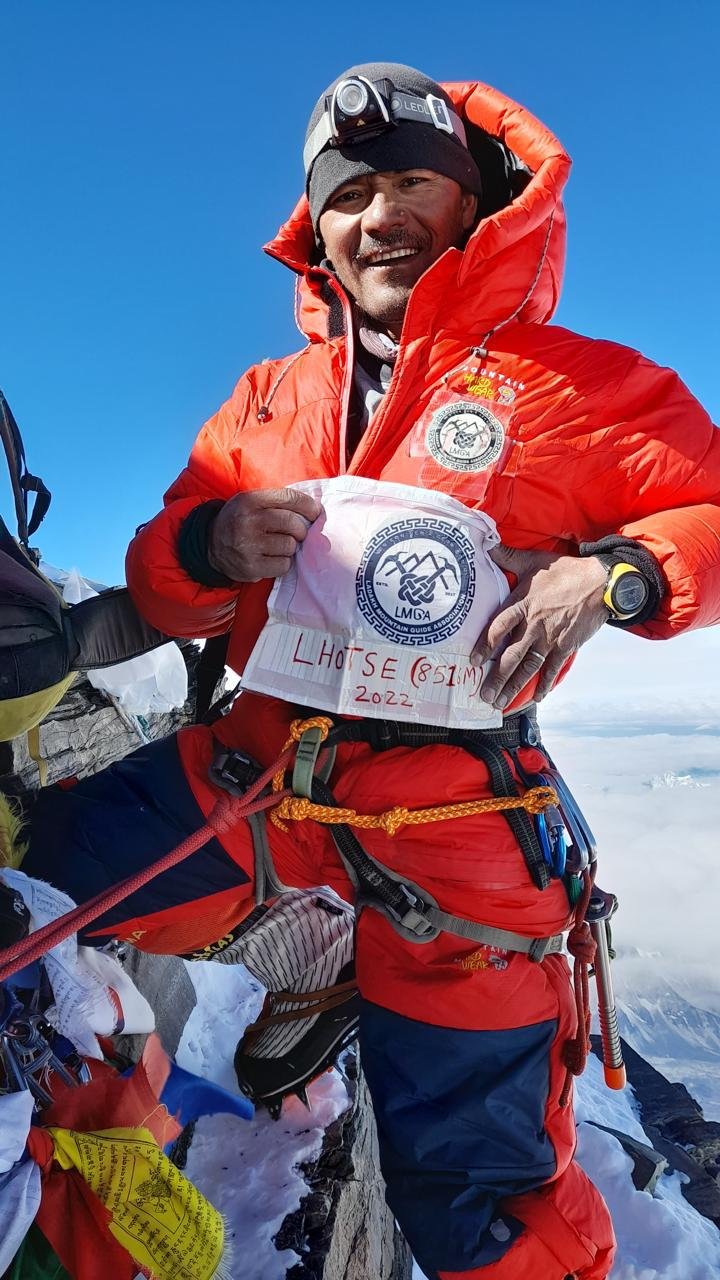
On 28 April 2022 he reached the summit of Annapurna (8,091 m) without supplemental oxygen, which The Himalayan Times reported as a first for an Indian climber. Sixteen days later he summited Lhotse (8,516 m), again without oxygen. On 23 May 2024 he stood on top of Everest without bottled oxygen.
We asked him about all of it, from the summits to the basics of staying safe at altitude in Ladakh. His answers have been lightly edited.
From camp helper to expedition leader
Tell us about growing up. When did the mountains first call you?
I don’t remember much about Tia village. My parents moved away when I was very young, to Housing Colony in Leh, and that’s where I spent most of my youth. My connection with the mountains started early. My first trek was in 1996, as a helper, and that was the beginning of my journey into the mountains. They have been a special part of my life ever since.
You started at the bottom. How did you go from carrying loads to leading expeditions?
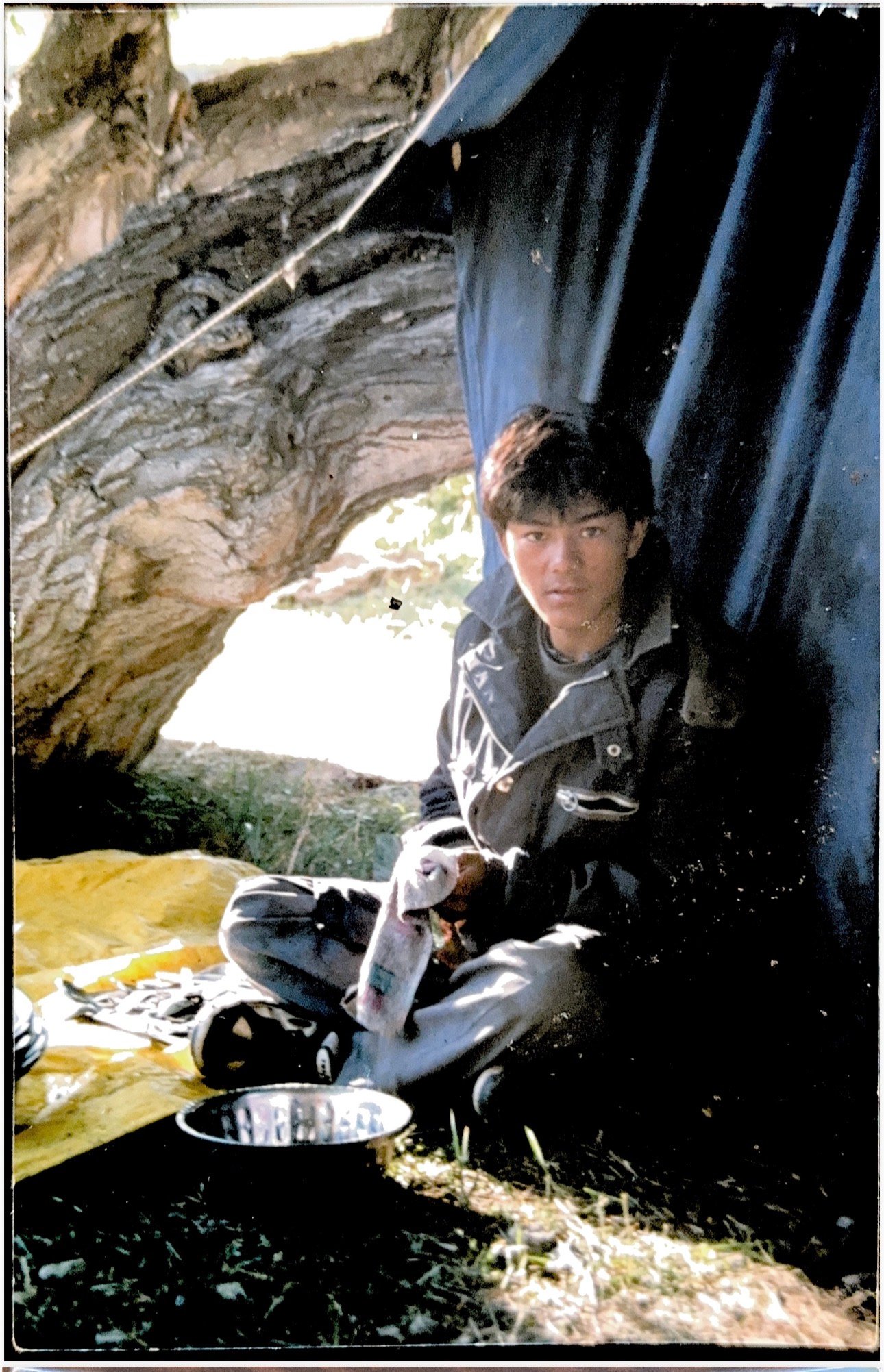
I started as a helper: washing dishes, helping set up tents and carrying loads.
Why climb without bottled oxygen?
Why did you choose to climb 8,000 m peaks without supplemental oxygen?
I never planned to climb 8,000-metre peaks. It started with my friend Bharath, one of the directors of Boots & Crampons, who gave me an opportunity I will always be grateful for.
B&C had a team preparing for Annapurna (8,091 m), and Bharath offered me a place as an extra Sherpa. B&C would cover my expedition fee and camping charges, and I would manage everything else myself. I never imagined it would open the door to the world of 8,000-metre mountains. I just took the chance.
At Annapurna Base Camp I met climbers from many countries. One of them, an Italian, had already climbed nine 8,000-metre peaks without bottled oxygen or Sherpa support. I was amazed. I had never imagined people could climb mountains that high entirely on their own.
One day at Base Camp, Bharath suggested I try Annapurna without bottled oxygen. His words stayed with me, and I thought: why not? What started as a chance to join an expedition slowly became my own journey: climbing 8,000-metre peaks without bottled oxygen and without Sherpa support.
Pick a place to see how much oxygen one breath holds there, compared with a breath at sea level.
Everest · Summited without bottled oxygen, 23 May 2024.
Climbed without bottled O₂
Each grid shows 100 dots; filled dots are the oxygen left in one breath. Calculated from the standard atmosphere; on the day, weather and season change it by a few percent.
Annapurna: the longest night
What was the hardest moment on Annapurna, Lhotse or Everest, and how did you get through it?
Of the three, Annapurna was by far the hardest. It is notorious for avalanches and unpredictable weather, and it is one of the most dangerous of the fourteen 8,000-metre peaks.
We reached the summit at around 2:15 pm, after a very long push from summit camp. It was my first time that high without bottled oxygen and I wasn’t sure how my body would respond, so for most of the climb I stayed just behind a well-known Italian climber.
Around noon I started feeling a very strange sensation in the top of my head. I didn’t understand what was happening, so I asked the Italian climber if he had a headache or anything unusual. He just said, “No, my legs are getting tired.”
Strangely, the moment I heard that, the feeling in my head disappeared and I felt completely fine. Soon after, I asked if I could go ahead. He agreed, and I carried on to the summit.
I wasn’t using oxygen myself, but I was carrying three bottles for my clients.
The real challenge began on the way down. The weather turned into a severe storm, visibility became very poor, and we got lost. We didn’t know which way to go.
In the distance I saw a light and told my Sherpa colleague we should follow it. When we got closer, it was the Italian climber. He hadn’t reached the summit; he had turned back just below the couloir.
The weather kept getting worse and we were completely disoriented. I was exhausted after such a long summit push. But then I noticed some climbers starting to behave strangely from the altitude. Some were confused, frightened and losing hope.
Seeing them, my tiredness disappeared and I felt a new surge of energy. I realised my real responsibility had only just begun. Reaching the summit was one thing; bringing everyone safely back to summit camp was now my priority.
Some climbers were so confused that they wanted to keep moving, even though nobody knew where we were going. I told them firmly that my clients were not going anywhere until we found the right route. In the end the other climbers agreed to stay with us.
On the way down I also met an old friend, Dawa Angchuk Sherpa, who was taking an American climber towards the summit. The weather started to improve a little. I knew they would have to come down eventually, so I decided we should wait for them instead of walking blindly in the wrong direction.
After several hours, we finally saw their lights coming down. I asked Urgan Sherpa to go towards them and find out how far we had drifted from the fixed route. When he came back, he told us which way to go.
We followed his directions and, after almost six hours of being lost, we found the fixed ropes again. We were incredibly lucky. I told everyone, “We are safe now. From here, we all go together.”
The Italian climber decided to go on alone, in a different direction, and didn’t join us. We later heard he was rescued two days later with severe frostbite on his hands and legs.
We finally reached summit camp at around 2:30 am.
That night taught me one of the most important lessons in mountaineering: reaching the summit is not the greatest achievement; bringing everyone back safely is. Staying together, staying calm, making the right decisions and looking after each other saved our lives that day.
The summit is my ambition, but returning safely is my responsibility.
On top of Everest
Take us to the summit of Everest. What did you see and feel at the top?
Standing on top of the world’s highest mountain and seeing all the other peaks below me was something truly special.
When I reached the top, I prostrated myself and thanked the mountain for allowing me to stand on its summit. I thanked everyone who had supported and helped me. Then I said to myself, “Well done, man. You made it!”
I couldn’t hold back my tears. I actually cried. It’s hard to put that feeling into words. It was one of the most beautiful moments of my life.
One step, one breath
Above 8,000 m without oxygen, a single step can take several breaths. What goes on in your mind between those breaths?
Whenever things get hard on a mountain, I tell myself, “Come on, you can do it!” I break the climb into small targets. I tell myself, “Let’s do 50 steps for my mother and 50 steps for my partner.” I have taken hundreds of steps in their names. My partner has always encouraged me, and I hear her words: “Come on, you can do another 100 steps!” These little things give me tremendous mental strength.
My body has never relied on supplemental oxygen, so I have trained myself to climb by managing my own breathing. Above 8,000 metres I focus on one step and one breath at a time. I don’t think about how far the summit is. I just keep moving towards the next small target.
How Skalzang breaks up the hardest ground. Scroll on and the steps keep coming, one at a time.
Then he starts again with the next 100.
With no bottled oxygen and no Sherpa, nobody was coming to carry you. What did you find when you were alone with your limits?
At that altitude every step was a struggle. My body was exhausted, breathing was difficult, and I knew nobody was coming to carry me to the summit. I had to rely completely on my own strength, determination and experience.
There were moments when I questioned myself. But being alone with your limits teaches you how strong your mind can be. I found determination, patience and a strength I didn’t know I had. The human body has limits, but the mind is incredibly strong. Sometimes the greatest victory is simply finding the courage to keep going, one step at a time.
When cold, hunger and exhaustion strip everything away, what is left? Is endurance about the body, the mind, or something deeper?
What remains is determination, inner strength and the will to keep going. I don’t think endurance is only about the body or the mind. It comes from something deeper: your heart, your emotions, and the people who give you a reason to push past your limits. Thinking of them gives me the strength to take just one more step.
Discipline, faith and letting go of ego
The summit is a few hours; the grind is years. What discipline do you keep when no one is watching, and what has it cost you?
For me, discipline is what I do every day when nobody is watching. I try to stay fit, train regularly, eat properly and stay mentally strong. Even on ordinary days, I remind myself that every small effort matters.
Mountaineering isn’t just my profession. It’s my passion and the place where I feel truly alive. It has cost me a lot of time with family, my girlfriend, friends and loved ones. I have missed many celebrations and given up a lot of comfort. But I believe in one thing: no pain, no gain. The summit may take a few hours, but getting there takes years of hard work, patience and sacrifice.
As a Buddhist, how do you hold impermanence and letting go of ego together with the ambition to stand where few people have stood?
Before any climb, whether it’s 5,000, 6,000 or 8,000 metres, I pray and chant a few mantras: Om Mani Padme Hum, Om Tare Tuttare Ture Soha and Om Ah Hum Vajra Guru Padma Siddhi Hum.
Om Mani Padme Hum is a prayer for the well-being, safety and good fortune of everyone, including everyone climbing with me. Om Tare Tuttare Ture Soha is the Tara mantra, which I chant for protection from obstacles on the climb. Om Ah Hum Vajra Guru Padma Siddhi Hum is the mantra of Guru Padmasambhava, which I chant for protection and strength.
These prayers give me inner strength, confidence and peace of mind. Of course, I also focus on my responsibilities: safety, rope work and every decision I make on the mountain.
Life is impermanent, and we should never let ambition or ego become bigger than life itself. I dream of standing on the world’s highest peaks, but I know I am a small person in front of these mountains. It isn’t about proving I’m stronger than anyone. It’s about challenging myself, staying humble, respecting nature and being grateful for every opportunity.
His advice for acclimatising in Leh
What is your best advice for acclimatising in Leh and avoiding altitude sickness?
Take your first 48 hours in Leh very seriously. Never rush acclimatisation, however fit or experienced you are. Altitude sickness can affect anyone, including strong athletes, experienced trekkers and mountaineers. Leh is at about 3,500 metres, and your body needs time to adjust to the lower oxygen.
- Rest properly for the first two days. Avoid strenuous activity on arrival. No running, no unnecessary stairs, no heavy loads, and no high-altitude trekking straight away.
- Drink enough water. Drink regularly through the day, even when you’re not thirsty. Go easy on tea and coffee, and avoid alcohol while you acclimatise.
- Eat properly. Have regular, nourishing meals with enough carbohydrates, like rice, bread and potatoes. Don’t skip meals, even if you don’t feel hungry.
- Start with easy walks. After 24–48 hours, if you feel well, take short, easy walks around Leh and build up slowly. Don’t push yourself just because you feel fit.
- Know the symptoms. Headache, nausea or vomiting, dizziness, loss of appetite, unusual tiredness and difficulty sleeping. If you have symptoms, don’t go any higher. Rest and get medical advice.
- Day 1ArrivalRest at your hotel. Drink water, eat properly, no alcohol.
- Day 2 Keep resting. No stairs or loads you don’t need.
- Day 3 If you feel well, short, easy walks around Leh. Build up slowly.
- Day 4 Earliest day for a high pass like Khardung La, if you have no symptoms. Ride slowly and take breaks.
Nothing ticked. Keep resting, drinking water and building up slowly.
Based on Skalzang’s advice: rest for the first 48 hours and spend at least 2–3 days in Leh before high passes. This is a planning aid, not medical advice. If you feel unwell, see a doctor in Leh.
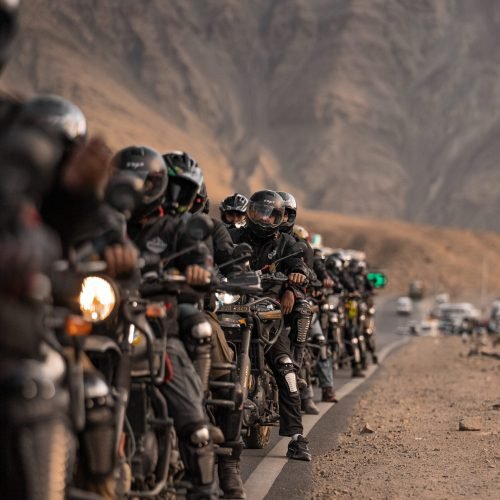
What should riders know about altitude when crossing passes like Khardung La on a bike?
Khardung La is at 5,359 metres, where there is much less oxygen. Riding a motorbike doesn’t mean your body doesn’t need time to adjust.
- Acclimatise properly. Spend at least 2–3 days in Leh before attempting high passes.
- Ride slowly. Don’t rush or overexert yourself.
- Stay hydrated. Drink plenty of water and avoid alcohol.
- Recognise the symptoms. Headache, nausea, dizziness, unusual tiredness and breathlessness can all be signs of altitude sickness.
- Take breaks. Stop if you feel uncomfortable. Don’t push on.
- Don’t ignore symptoms. If they appear or get worse, go down to a lower altitude. Never keep climbing with signs of altitude sickness.
- Keep warm. Weather on the high passes changes fast. Carry warm, windproof clothing.
Which trek or peak in Ladakh do you recommend for a first-timer?
For first-timers, I recommend the Sham Valley trek, the Markha Valley trek and the Stok to Shang Sumdo trek. They are a beautiful introduction to Ladakh’s mountains and landscapes.
For peak climbing, good options include UT Kangri, Kyager Kangri, Mentok Kangri, Nya Kangri, Dzo Jongo, Kang Yatse II, Korzok Kangri and Kang Yatse I. Beginners should start with an easier, less technical peak before moving on to harder climbs. Proper acclimatisation and preparation are essential.
How can travellers choose a safe guide and explore Ladakh responsibly?
Always choose a guide who is properly trained, experienced, certified and knows the area, especially for trekking and mountaineering. Check their experience, qualifications, safety knowledge and how prepared they are for emergencies.
What the mountains taught him, and what’s next
What have the mountains taught you, and what’s next for you?
Patience, discipline, humility and respect for nature. They have taught me about good leadership, understanding others, making the right decisions and taking responsibility for the team. Experience, technical knowledge and proper rope work matter enormously for everyone’s safety. A good mountaineer knows how to reach the summit, but also when to turn back, because coming back safely is just as important as reaching the top.
The mountains have also taught me that we don’t need many things to live a happy life: simple things, a good heart, a pure soul and good health. Health is wealth. Teamwork and looking after each other through difficult times saves lives. On a mountain, nobody is bigger than the team.
My next big mission is Kangchenjunga (8,586 m), the world’s third-highest mountain, in pure alpine style, without bottled oxygen and without Sherpa support. It will be hard and ambitious, but I am determined to push my limits again. As they say, no pain, no gain.
Heading to Ladakh? Namoh Expedition has run trips across Ladakh for more than 12 years, with acclimatisation days in Leh built in. Tell us what you want to do and we’ll help you plan it safely.
Plan your tripAnswers from Skalzang Rigzin, edited for length and clarity. Photos courtesy of Skalzang Rigzin. Summit dates: The Himalayan Times (Annapurna, Lhotse) and ExplorersWeb (Everest). Have a story from the road? Send it to the Namoh Journal.